


Psychology has shown us that one of the biggest romanticized ideas is finding a soul mate. The truth is that finding a soul mate isn’t about finding a perfect match, but about creating a meaningful connection with someone as time goes on.
Even though the idea of finding the one is found in every culture, research shows that to have a lasting relationship, it’s shaped by an emotional connection, behavior, and shared effort instead of just compatibility. This idea changes love from something mystical into something that’s intentional and deeply human.
Why “Finding the Right Person” Isn’t What You Think
Most people grow up believing there’s one person out there who will just “fit.” Someone who feels familiar, easy, and instantly right.
That idea is everywhere in movies, books, and even dating culture, which pushes the belief that love should feel effortless from the start. And while that sounds exciting, it can also create pressure.
Because when things don’t feel perfect all the time, it’s easy to start thinking:
“Maybe this isn’t the right person.” But real relationships don’t work like that.
Why Compatibility Isn’t Enough
It makes sense to think that having things in common would make a relationship work.
People are usually drawn to:
- Similar interests.
- Similar lifestyles.
- Matching long-term goals.
- Shared values.
And while those things can help create an initial connection, they don’t guarantee that a relationship will last.
A lot of research has shown that couples who stay together long-term aren’t necessarily more “compatible” than couples who struggle. So, the question becomes, if it’s not just compatibility, then what actually matters?
What’s Going on When Relationships Are Hard?
When a relationship starts to feel difficult, a lot of people assume it’s because they’re too different. You might hear things like:
- “We’re just not a good match.”
But a lot of the time, what’s really happening is:
- Communication has broken down.
- Frustration has built up.
- Small issues aren’t being handled in a healthy way.
It’s less about who you are as a couple and more about how you’re interacting with each other.
What Strong Relationships Create
Long-term relationships aren’t built on finding someone perfect. They’re built on what two people create together over time. That usually includes:
- Respect for each other as individuals.
- Support for personal growth and goals.
- Communication that feels open and steady.
- A shared sense of direction.
Couples who feel connected tend to create meaning together through shared experiences, goals, and everyday life. That’s what builds something deeper than surface-level attraction.
Picking the Relationship Matters Most
One thing people don’t talk about enough is choice. Relationships don’t stay strong just because two people are a great match. They stay strong because both people keep choosing to show up.
That looks like:
- Putting in effort regularly.
- Working through challenges instead of avoiding them.
- Staying committed even when things aren’t easy.
When you’re always questioning if there’s someone better, it takes away from what you’re building.
But when you focus on what you’re creating together, it creates stability and allows the relationship to grow naturally.
Showing Up Is Important
Being alike isn’t what creates a strong relationship. What matters more is how you respond to each other. That includes:
- Being there when your partner needs support.
- Showing interest in their thoughts and feelings.
- Responding in a way that feels caring and present.
These small moments might not seem big, but they build:
- Trust.
- Emotional closeness.
- A sense of being on the same team.
Feeling understood and supported creates the kind of connection that actually lasts.
Building Something Great Together
Instead of thinking about love as something you “find,” it can help to see it as something you build. That can look like:
- Learning how to communicate better.
- Growing through challenges instead of avoiding them.
- Creating shared experiences.
- Supporting each other’s personal growth.
The focus shifts from:
- “Is this the perfect person?”
to:
- “Can we build something meaningful together?”
That shift changes everything.
Rethinking the Idea of a Soulmate
The idea of a soulmate doesn’t have to disappear, but it can change. Instead of thinking of a soulmate as someone who is perfect for you, it can be someone you grow with over time. Attraction and chemistry matter, but they’re only part of the picture.
What really creates a lasting connection includes:
- Growing together.
- Putting in mutual effort.
- Creating emotional closeness over time.
That’s what builds something deeper than just compatibility.
Changing What You’re Looking for.
If you’re thinking about a long-term partner, it can help to focus less on perfection and more on connection. Look for someone who:
- Is willing to grow with you.
- Communicates openly and honestly.
- Respects you.
- Accepts who you are.
- Supports your life and goals.
When both people are willing to build something together, compatibility becomes something you create and not something you’re just lucky enough to find.
Love isn’t about finding someone who fits perfectly into your life without effort. It’s about building something with someone who’s willing to grow, communicate, and stay committed alongside you. That’s what creates something real and something that lasts.
Final Thoughts: No Perfect Formula for Finding Love
There is no perfect formula for finding love, which means no algorithm, test, or checklist can guarantee that you’ll have a successful relationship. What really matters in a connection is how two people show up for each other.
A soulmate isn’t just a person that you find, but it’s someone that you build your life with. When both partners grow, invest, and stay committed to one another, compatibility is something that is created, not something that’s found.
Frequently Asked Questions
1. What does psychology say about finding your soulmate?
Psychology suggests that soulmate-like relationships are often built through emotional safety, shared values, trust, healthy communication, and long-term compatibility rather than instant perfection.
2. Is a soulmate a real psychological concept?
The word “soulmate” is more romantic than clinical, but psychology does support the idea that some people form unusually deep emotional bonds based on attachment, compatibility, timing, and shared growth.
3. Can someone feel like a soulmate right away?
Yes, strong attraction can happen quickly, but psychology encourages people to look beyond chemistry and notice consistency, respect, emotional maturity, and long-term compatibility.
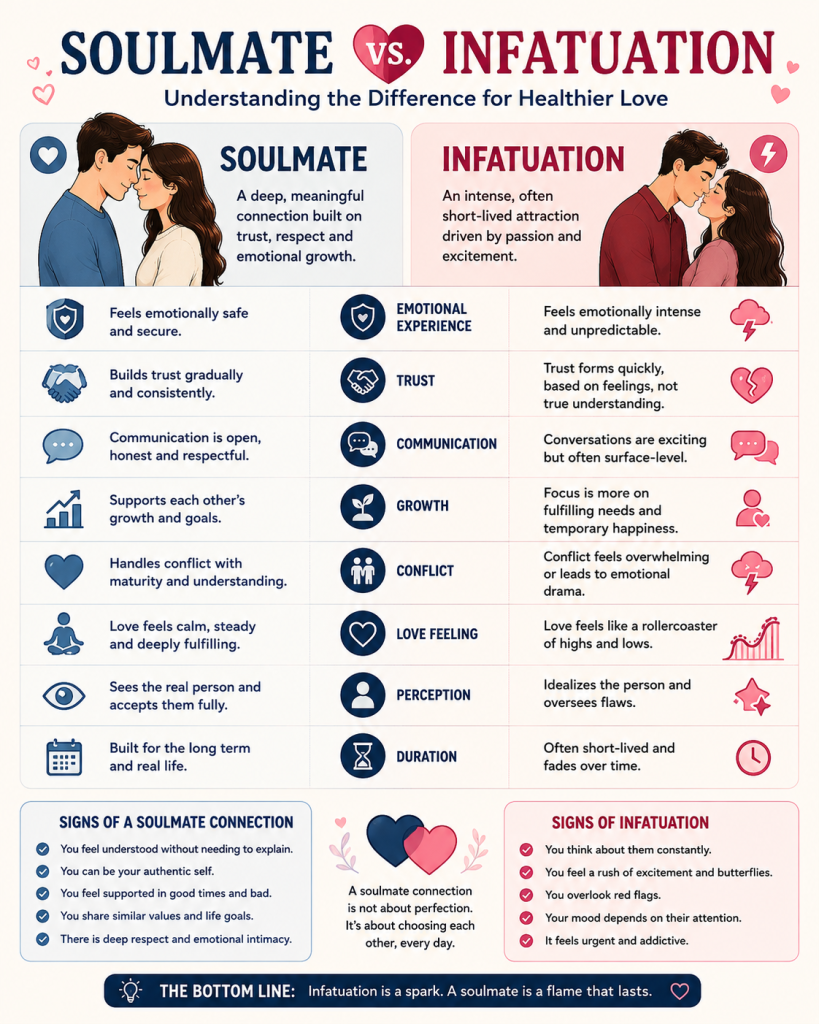
4. What is the difference between love and infatuation?
Infatuation often feels intense, urgent, and idealized. Love usually becomes steadier over time and includes trust, acceptance, communication, and care for the other person’s well-being.
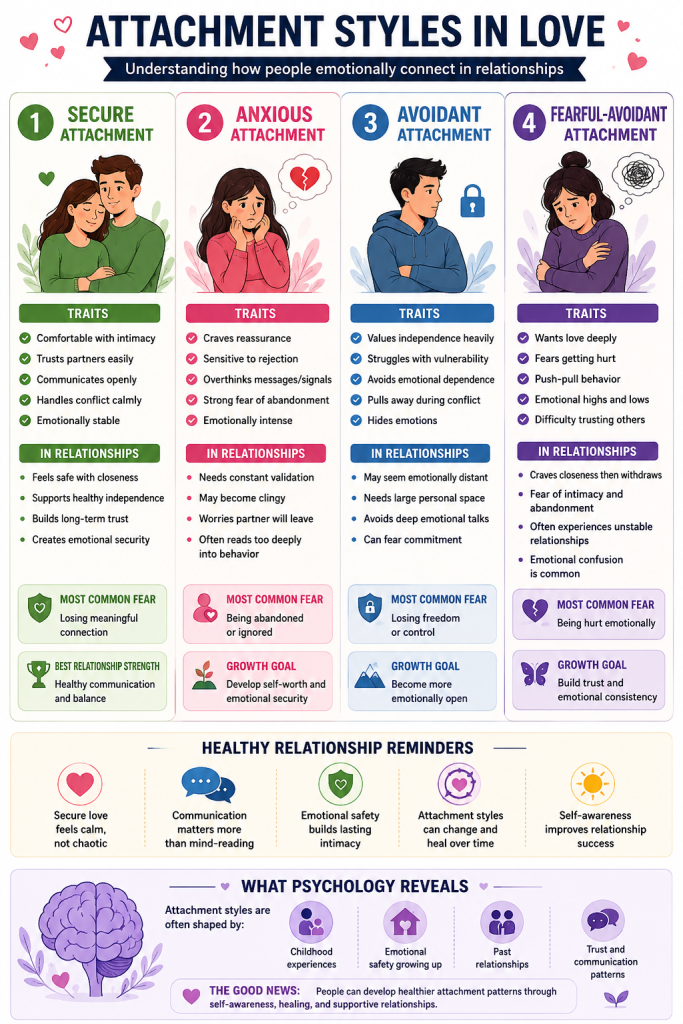
5. How do attachment styles affect soulmate relationships?
Attachment styles influence how people give love, receive love, handle conflict, and respond to closeness. Secure attachment often supports healthier, more stable relationships.
6. Can anxious attachment make someone seem like a soulmate?
Yes. Anxious attachment can make emotional highs and lows feel powerful, but intensity does not always mean compatibility. A healthy bond should also feel safe and respectful.
7. What are signs of a healthy soulmate connection?
Signs include emotional safety, mutual respect, honest communication, shared values, healthy boundaries, trust, and the ability to grow together through life’s challenges.
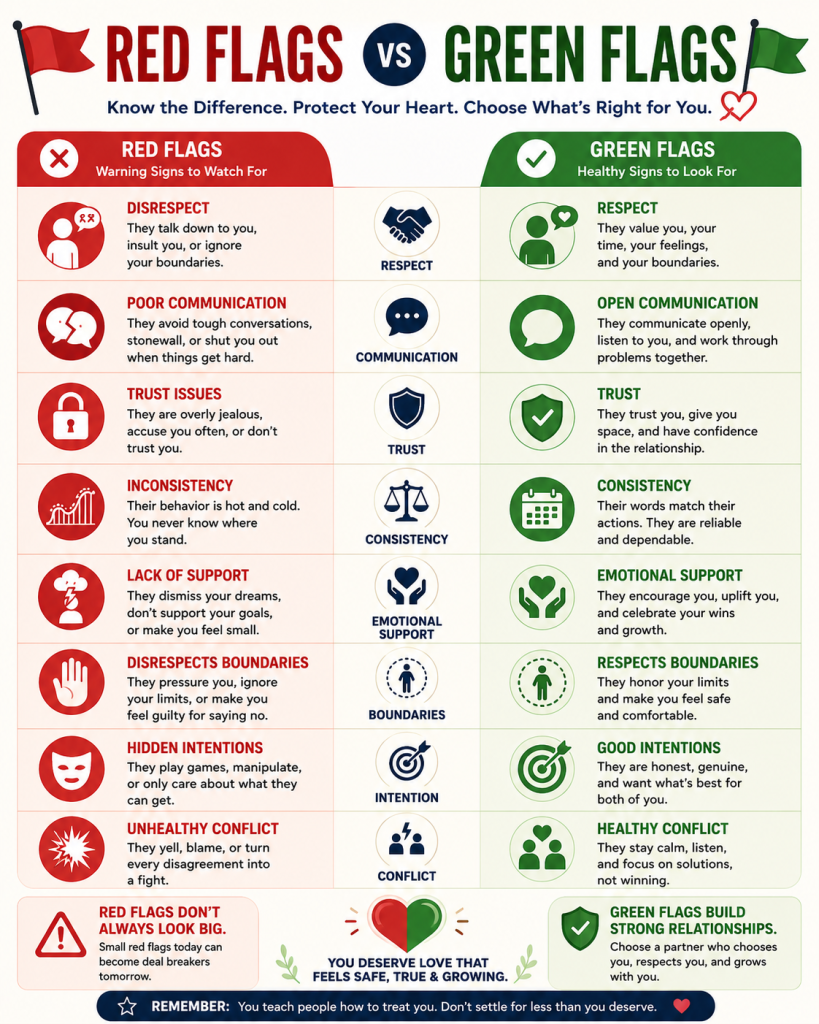
8. What are red flags in a so-called soulmate relationship?
Red flags include control, jealousy, manipulation, emotional inconsistency, disrespect, love bombing, pressure, isolation, or feeling constantly anxious about where you stand.
9. Can a soulmate relationship still have conflict?
Yes. Healthy relationships can have conflict, but both people should be willing to listen, take responsibility, repair hurt, and work toward understanding instead of blame.
10. Does chemistry mean someone is your soulmate?
Chemistry can create attraction, but it is not enough by itself. A lasting connection also needs emotional compatibility, trust, shared values, and consistent effort.
11. Why do people keep choosing the wrong partners?
People may repeat familiar emotional patterns from past relationships or childhood experiences. Without self-awareness, familiar chemistry can be mistaken for true compatibility.
12. Can you have more than one soulmate?
Many people believe you can have more than one deep connection in life. Psychology supports the idea that meaningful bonds can form with different people at different stages.
13. How important are shared values in finding a soulmate?
Shared values are very important because they shape decisions about family, lifestyle, money, loyalty, communication, personal growth, and long-term relationship goals.
14. Can opposites really attract?
Opposites can attract at first, but long-term relationships often work better when people share core values, emotional expectations, and similar ideas about commitment.
15. How do you know if it is love or emotional dependency?
Love feels supportive, respectful, and freeing. Emotional dependency often feels fearful, controlling, anxious, or based on needing constant reassurance to feel secure.
16. Can a soulmate relationship help you grow?
Yes. A healthy soulmate connection often encourages emotional growth, self-awareness, confidence, and healing without forcing either person to lose their identity.
17. What role does timing play in finding a soulmate?
Timing matters because two compatible people may still struggle if they are emotionally unavailable, unhealed, or not ready for the same kind of relationship.
18. Should love feel calm or exciting?
Healthy love can feel both exciting and calm. Early attraction may feel thrilling, but lasting love usually includes peace, safety, trust, and emotional steadiness.
19. Can someone become your soulmate over time?
Yes. Deep love can grow gradually as two people build trust, share experiences, communicate honestly, and choose each other through different stages of life.
20. How can I become more ready to find a soulmate?
You can become more ready by understanding your relationship patterns, healing old wounds, setting healthy boundaries, knowing your values, and choosing partners who treat you with respect.